


Sweden Industrial Control Room Consoles Project | Nordic Mission-Critical Monitoring Center Solution

In Northern Europe, industrial monitoring and control environments are built around one core principle: operational stability over long periods of time.
Whether in advanced manufacturing, engineering research, or high-precision industrial systems, control rooms are expected to support continuous monitoring, data visualization, and multi-system coordination without interruption.
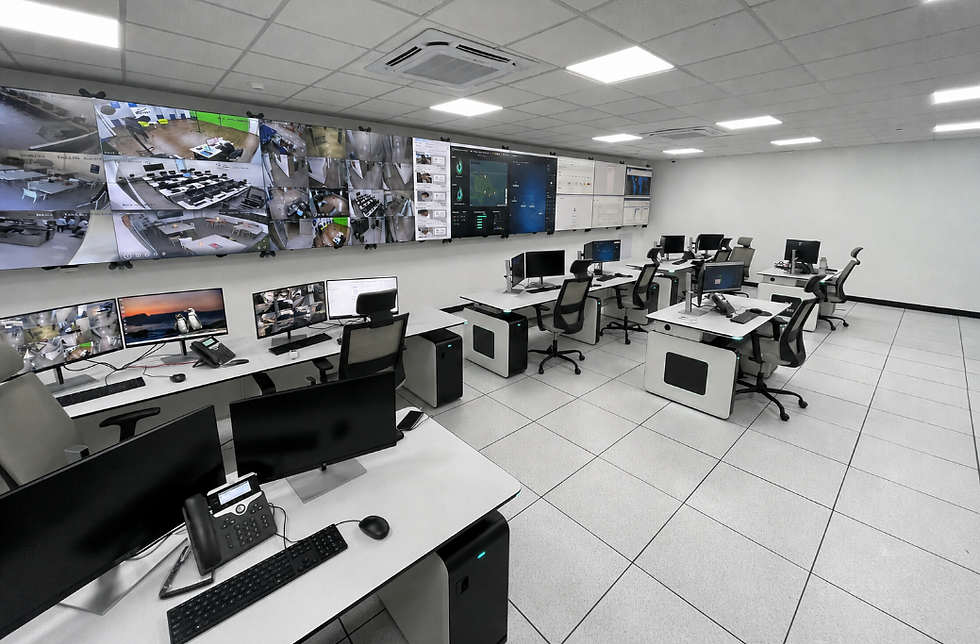
In a recent project delivered in Sweden, KESINO provided a customized control room console solution for a large-scale industrial monitoring center operated by a global technology organization in the precision measurement and industrial systems sector.
The project reflects a typical Nordic requirement: high-density data environments combined with strict expectations for ergonomics, system reliability, and long-term operational consistency.

Industrial Control Rooms in Nordic Regions Follow a Different Logic
Compared with many other regions, control room design in Northern Europe tends to prioritize long-term usability and structured operational environments.
The focus is not only on how the system performs on day one, but how it will perform after years of continuous operation.
In environments such as industrial monitoring centers, operators are responsible for tracking system performance, analyzing real-time data, and coordinating between multiple technical platforms.
This requires a workspace that supports concentration, minimizes unnecessary movement, and maintains stable equipment integration over time.

Challenges in High-Precision Monitoring Environments
Industrial control rooms like this typically face several structural challenges during planning and operation.
One of the most common issues is equipment density.
Modern monitoring systems often require multiple displays, diagnostic terminals, and communication interfaces running simultaneously.
As systems evolve, additional devices are introduced, which gradually increases the complexity of workspace organization.
Another challenge is maintaining clarity in operator workflows.
When multiple systems are displayed across several screens, the physical layout of the workstation directly affects how quickly operators can interpret and respond to information.
Cable organization, equipment placement, and structural accessibility all become critical factors in long-term efficiency.

Design Approach for Continuous Operation Environments
For this Sweden-based industrial monitoring center, the workstation layout was developed around continuous operation requirements.
Instead of focusing on individual workstation appearance, the overall structure was designed to support coordinated multi-operator interaction within a unified control environment.
Each workstation was planned to maintain clear separation between equipment zones, operator space, and maintenance access pathways.
This approach helps ensure that technical teams can maintain and upgrade systems without disrupting daily operations.
Modular Control Room Console Strategy
One of the key principles applied in this project was modularity.
Industrial environments rarely remain static. Monitoring systems are upgraded, software platforms evolve, and operational requirements change over time.
A modular console structure allows the control room to adapt without requiring full reconstruction.
In practice, this means workstation components can be adjusted, expanded, or reconfigured based on future system needs.
This flexibility is particularly important in high-value industrial environments where downtime must be minimized.
Ergonomics as a Long-Term Operational Factor
In continuous monitoring environments, operator performance is closely linked to workstation design.
Long shifts require stable posture support, proper screen alignment, and easy access to frequently used systems.
In Nordic control room environments, ergonomics is not treated as an optional feature. It is considered part of operational safety and efficiency planning.
For this reason, workstation height, viewing angles, and equipment placement were aligned with long-duration usage requirements rather than short-term visual layout preferences.
Why Control Room Consoles Are Now Treated as Infrastructure
Across industrial sectors in Europe, control room consoles are increasingly viewed as part of operational infrastructure rather than standalone furniture.
This shift is driven by the realization that workstation systems directly affect:
Information processing efficiency
Operator coordination speed
Maintenance accessibility
System expansion capability
Long-term operational stability
Once installed, these systems typically remain in service for many years and must support evolving technological environments without structural replacement.
Where This Type of Control Room Is Commonly Used
Industrial-grade control room console systems are widely used in:
Advanced manufacturing monitoring centers
Industrial automation control rooms
Engineering simulation and testing facilities
Energy and utility monitoring systems
Transportation infrastructure control centers
Research and technical operation centers
Although each application differs in function, they share a common requirement: stable, continuous, and highly coordinated operational environments.
Frequently Asked Questions
Why are Nordic control room projects focused on long-term stability?
Because industrial systems in these regions are typically designed for continuous operation over many years, requiring workstation infrastructure that can maintain performance and adaptability over time.
What makes industrial control room consoles different from office desks?
Industrial consoles are designed for multi-system integration, structured cable management, continuous operation, and long-term ergonomic support, which office furniture cannot reliably provide.
Why is modular design important in control room environments?
Because industrial monitoring systems evolve over time. Modular design allows upgrades and reconfiguration without full system replacement.
Are control room consoles considered part of industrial infrastructure?
Yes. In modern industrial environments, they are treated as part of operational infrastructure due to their role in supporting system monitoring and decision-making.
What is the main factor in designing industrial control rooms?
The primary factor is operational continuity—ensuring that systems, operators, and workspace design function seamlessly over long periods without disruption.
Conclusion
Industrial control room environments in Sweden and across Northern Europe continue to set high standards for operational design and system integration.
The project reflects a broader trend in mission-critical environments: workstation design is no longer treated as secondary equipment, but as a core component of operational infrastructure.
As industrial systems become more complex and data-driven, control room consoles must support not only current operational requirements but also long-term adaptability and system evolution.


Comments