


How to Design a Modern Control Room: Key Planning Factors for Mission-Critical Environments

A modern control room is the center of operational decision-making for many industries.
From financial institutions and smart city command centers to industrial facilities and transportation networks, control rooms are responsible for monitoring information, coordinating teams, and supporting rapid responses.
However, building an effective control room requires more than installing screens and computers.
A successful control room design needs to consider workflow, operator requirements, equipment integration, ergonomics, and future expansion.
Among these factors, the control room console plays a critical role because it connects operators with the technology they rely on every day.
Why Modern Control Room Design Has Become More Complex
Traditional monitoring rooms were often designed around a limited number of systems.
Today, organizations manage increasingly complex digital environments.
A modern control room may integrate:
Real-time monitoring platforms
Multiple display systems
Communication networks
Data analysis tools
Security management systems
Industrial control applications
As information volume increases, operators need a workspace that allows them to process data efficiently.
This is why professional control room planning has become an important part of mission-critical facility construction.
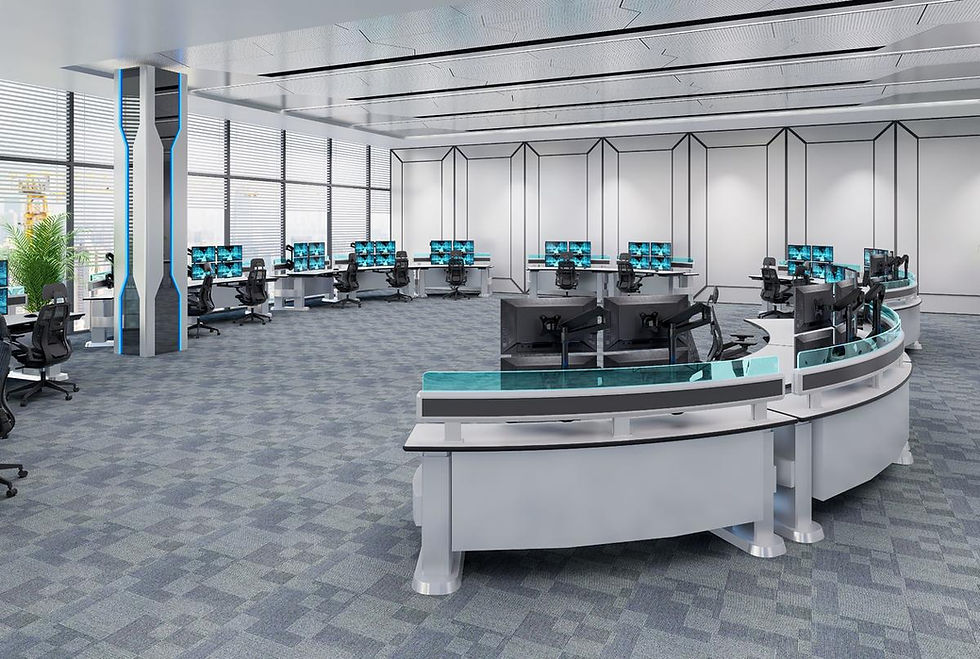
1. Start With Operator Workflow, Not Furniture Selection
One of the most common mistakes in control room projects is selecting furniture before understanding how operators actually work.
The correct approach starts with workflow analysis.
Project teams should evaluate:
What information operators monitor
How teams communicate
Which equipment is frequently accessed
How operators respond to incidents
How many people work during each shift
The control room console layout should support these activities rather than force operators to adapt to the workspace.
2. Choose the Right Control Room Console Layout
Different operational environments require different console arrangements.
Common layouts include:
Straight-Line Console Layout
Suitable for environments where operators need clear alignment and efficient space utilization.
Common applications:
Security monitoring centers
Network operation centers
Financial operation rooms
Corner Console Layout
Useful when maximizing room space and creating connected workstations.
Common applications:
Command centers
Industrial monitoring rooms
Government operation centers
Island Console Layout
Designed for larger operation environments where teams need centralized communication.
Common applications:
Emergency command centers
Transportation control rooms
Smart city operation centers
The best layout depends on room dimensions, operator workflow, and equipment requirements.
3. Consider Equipment Integration Requirements
Modern control rooms rely on many connected devices.
A professional control room console should support:
Multiple monitors
Computer systems
Communication equipment
Network devices
Power connections
Poor equipment planning can create workspace limitations and increase maintenance difficulty.
A well-designed console integrates technology while keeping the operator area organized.
4. Ergonomics Should Be Part of Control Room Planning
Many control rooms operate 24 hours a day.
Operators may spend long periods monitoring systems, making ergonomics an essential design factor.
Important considerations include:
Monitor viewing height
Working distance
Desk height
Leg space
Equipment accessibility
An ergonomic control room console helps reduce unnecessary physical strain and supports consistent operator performance.
5. Plan Cable Management From the Beginning
Cable management is often ignored during early design stages.
However, modern control rooms contain large amounts of wiring:
Power cables
Network cables
Signal cables
Communication lines
Without proper planning, cables can affect maintenance efficiency and future upgrades.
Professional console systems include structured cable routing solutions that improve organization and accessibility.
6. Design for Future Expansion
A control room built today may need to support different technology requirements in the future.
New systems may be introduced.
Additional operators may be required.
Equipment configurations may change.
For this reason, modular control room consoles are becoming increasingly popular.
A modular design allows organizations to:
Add workstation positions
Adjust layouts
Upgrade equipment
Reduce future renovation costs
Long-term flexibility should always be considered during initial planning.
Common Mistakes in Control Room Design
Focusing Only on Equipment
Advanced technology is important, but without proper workspace planning, operators may not use these systems effectively.
Ignoring Operator Experience
Operators are the daily users of the control room. Their comfort and workflow directly influence operational efficiency.
Using Standard Office Furniture
Office desks are not designed for continuous operation, multiple displays, complex wiring, or mission-critical environments.
Planning Only for Current Needs
A control room should support future changes instead of becoming outdated after several years.
Industries That Require Professional Control Room Solutions
Professional control room consoles are widely used in:
Smart city command centers
Banking operation centers
Security operation centers
Power dispatch centers
Transportation control rooms
Industrial monitoring centers
Emergency response centers
Research and training facilities
Although these industries have different functions, they share the same requirement: reliable and efficient operator environments.
Frequently Asked Questions
What is a modern control room?
A modern control room is a centralized operational environment where operators monitor systems, analyze information, and coordinate responses using advanced technology platforms.
Why is the control room console important?
The control room console provides the physical workspace where operators interact with technology. Its design affects workflow efficiency, equipment organization, and long-term usability.
What factors should be considered when designing a control room?
Important factors include operator workflow, console layout, equipment integration, ergonomics, cable management, and future expansion.
What is the best control room console layout?
There is no single best layout. The ideal configuration depends on room size, number of operators, operational requirements, and communication needs.
Can control room consoles be customized?
Yes. Professional manufacturers can customize console dimensions, layouts, materials, monitor configurations, and accessories according to project requirements.
Conclusion
Modern control room design requires a balance between technology, people, and workspace infrastructure.
A successful control room is not simply a room filled with equipment. It is an environment designed to help operators work efficiently, respond quickly, and manage complex information.
By selecting the right control room console, planning ergonomic workspaces, and considering future requirements, organizations can create reliable mission-critical environments that support long-term operations.


Comments